Jensen Huang
Was Nvidia’s CEO targeted by Chinese intelligence?
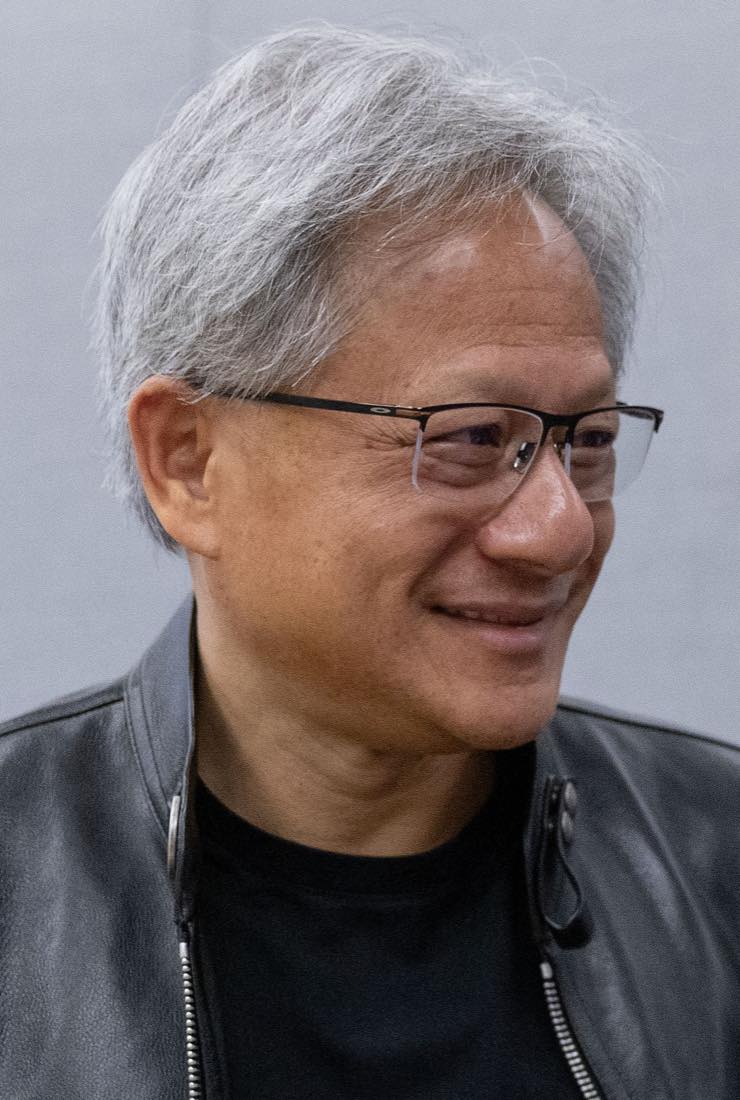

On October 29, The New York Times reported that U.S. officials had judged a Singapore cloud-company executive to be a suspected Chinese intelligence asset who had built a close relationship with Nvidia chief executive Jensen Huang. On November 8, Huang told staff he’d had an affair with her, and Nvidia’s board opened an independent investigation. This page tracks what is documented about whether Beijing targeted the head of America’s leading AI chipmaker, and what still rests on anonymous sources.
The New York Times reported, citing people briefed on U.S. surveillance, that a Singapore cloud executive was a suspected Chinese asset close to Jensen Huang. Huang has admitted an affair with her and Nvidia's board is investigating. On Nov. 12 Attorney General Todd Blanche said the FBI is investigating and the Justice Department has not reached a conclusion. No charge has been filed, and Beijing calls it a smear.
What would change this rating ↓
huang.america2.newsGet America 2.0 in your inbox
Analysis of Russian influence, information warfare and the networks behind them. Free; unsubscribe anytime.
Latest reports
New reporting from major outlets and official sources, listed as it appears. Our monitoring adds headlines from major outlets automatically. "Checked" means our software fetched the full report and confirmed it supports its headline. "Reviewed" means an editor checked it against its source. "Auto" items have not been checked yet. Tap a label for our note. None of this is an endorsement. Our assessment is the rating above.
- Jensen Huang's daughter helped steer Nvidia response to Megaspeed scrutiny, FT reports (Reuters)
checked ▾
Our software fetched the full report and confirmed it supports its headline. Not yet reviewed by an editor. (2026-11-17) - Jensen Huang Breaks Silence, Signals Willingness to Return as Nvidia CEO (WSJ)
auto ▾
Not checked yet. Listed automatically because it comes from a major outlet or official source. - Ex-Nvidia CEO Jensen Huang agrees to testify as Congress raises concerns about affair with suspected Chinese spy (CBS News)
reviewed ▾
An editor checked this report against its source. (2026-11-17) - Jensen Huang to appear before House panels Dec. 1; Nvidia lawyer slated to testify Dec. 2 (CNBC)
reviewed ▾
An editor checked this report against its source. (2026-11-17) - Nvidia's board forms export oversight panel after scrutiny over China chip sales (CBS News)
reviewed ▾
An editor checked this report against its source. (2026-11-17) - Commerce and Justice departments release details of Megaspeed investigation (The Washington Post)
auto ▾
Not checked yet. Listed automatically because it comes from a major outlet or official source. - US government confirms investigation into tech firm Megaspeed (BBC)
reviewed ▾
An editor checked this report against its source. (2026-11-17) - Nvidia forms board committee to oversee national security, export controls (Reuters)
reviewed ▾
An editor checked this report against its source. (2026-11-17) - US investigates company led by Jensen Huang’s ‘Chinese spy mistress’ (The Telegraph)
reviewed ▾
An editor checked this report against its source. (2026-11-17) - U.S. agencies detail Megaspeed investigation in 2024, dispute ‘inaccurate information’ (CNBC)
reviewed ▾
An editor checked this report against its source. (2026-11-17)
What would change this assessment
So far the intelligence claim traces back to one chain of reporting: The New York Times, citing people briefed on U.S. surveillance. Other outlets repeating that report are not independent confirmation. Beijing’s denial doesn’t address the evidence, so it can’t move the rating either way.
- not seenWould move up: an official goes on the record. The FBI, the Justice Department, the Director of National Intelligence or a committee chair confirms the assessment, or the underlying intelligence is declassified.
- not seenWould move up: charges. An espionage, foreign-agent or export-control charge against the executive or Megaspeed, or Singapore police findings tied to intelligence work.
- partly seenWould move up: separate confirmation. A second outlet confirms, with its own sources, that China’s Ministry of State Security directed her. CNN reported on Nov. 13, citing its own sources, that U.S. intelligence intercepted communications about the relationship, that she had been an intelligence target for months, and that Secretary of State Marco Rubio circulated a classified memo about it to senior officials (CNN). CNN did not report that the Ministry of State Security directed her.
- not seenWould move up: a finding of loss. Nvidia’s board investigation, or a regulator, finds that she obtained non-public information or influenced Nvidia decisions.
- not seenWould move down: officials walk it back. U.S. officials on the record describe the relationship as ordinary business, with no intelligence concern.
- not seenWould move down: the reporting is corrected. The original reporting is corrected or retracted, or turns out to rest on a single disputed assessment.
If the board says it found no compromise, that alone would not show she wasn’t tasked to target him. It would leave the question open.
What is actually known
- The intelligence claim is anonymous. The Times cited people briefed on U.S. surveillance of the executive, Alice Huang (no relation to Jensen Huang) of the Singapore cloud firm Megaspeed. No official has said it on the record, and no charge or document has been made public (The Hill, DCD). After a classified briefing this week, Rep. Jim Himes, the top Democrat on the House Intelligence Committee, said he still did not know whether she knowingly gathered information for China, and that the heads of national intelligence and the CIA “didn’t know” whether the FBI had opened an investigation (Politico).
- Officials reportedly did not think Jensen Huang knew. According to the Times report, U.S. officials did not believe he was aware of her alleged information-gathering, and neither he nor Nvidia received a defensive briefing. The Times also reported that President Trump was briefed about a year earlier and took no action (DCD).
- Huang admitted an affair. On November 8 he told Nvidia staff in an email that he had an affair with her: “I was unfaithful to my wife. My actions hurt her and our children. There is no excuse for what I did” (CNBC).
- Nvidia’s board opened an independent investigation. Independent directors, assisted by outside counsel, will examine reporting that Huang “has been the target of a foreign intelligence effort.” The board says it “has no reason to believe that either national security or NVIDIA secrets were compromised” (Nvidia board statement).
- The board hired outside counsel. Nvidia’s independent directors retained Joon H. Kim, former acting U.S. Attorney for the Southern District of New York, and his firm Wachtell, Lipton, Rosen & Katz to run the investigation (CNBC).
- The Justice Department is investigating Megaspeed. NBC and CBS, citing law-enforcement sources, report a National Security Division criminal probe of Megaspeed over chip smuggling that also examines people tied to it, including Alice Huang. Neither describes it as a probe of Jensen Huang (NBC News, CBS News).
- Trump says Huang didn’t know. On November 9 Trump said Huang “had absolutely no idea that the person in question was a spy” and “I know the FBI is looking into it, in terms of something else.” The FBI declined further comment (NBC News, BBC).
- Shareholders sued. A class action filed in federal court in San Jose says Nvidia misled investors about the affair and its ties to Megaspeed (CBS News).
- Nvidia’s first response, on October 30, was a denial. A spokesperson called Huang’s interactions with her “not unusual or unexpected.” The same spokesperson said allegations that Megaspeed diverted chips “were thoroughly investigated and debunked last year” (ABC News).
- Megaspeed was already under scrutiny. Earlier reporting accused it of helping route restricted Nvidia hardware to Chinese users. Megaspeed said it complies with U.S. export controls (DCD).
- Beijing calls it a smear. Foreign Ministry spokesperson Guo Jiakun called the reports “baseless and purely slanderous smears against China” (ABC News).
- No SEC disclosure yet. As of November 9, Nvidia had filed no 8-K on the matter (SEC EDGAR).
How governments are responding
- House: a subpoena threat. House Foreign Affairs Chair Brian Mast told ABC News on November 10 he is prepared to subpoena Huang if he does not answer the committees’ briefing request by November 11. Republicans lose control of House committees in January (ABC News).
- Senate: a resignation call. Sen. Kevin Cramer (R-N.D.), of the Banking Committee, said: “The potential for extortion is so tremendous that something as sensitive as Nvidia chips, I just think he’s got to go” (Reuters).
- The administration: a reported clash over Megaspeed. Axios, citing anonymous sources, reports that Treasury Secretary Scott Bessent asked Commerce Secretary Howard Lutnick at a November 5 Situation Room meeting why Megaspeed is not on the Commerce entity list; Lutnick said he would look into it. Treasury and Commerce had not commented (Axios).
- Taiwan: entry barred. Interior Minister Liu Shyh-fang told legislators on November 11 that Alice Huang had entered Taiwan, is now abroad, and cannot return because her entry permit has been revoked. Liu said she would not have been admitted had officials known she was a spy (Taipei Times).
- Megaspeed denies wrongdoing. The company says inspections by U.S. Commerce, Malaysia’s trade ministry and Nvidia found “no evidence of any violations” (CBS News).
Claims in circulation
The most-shared claims, and what public sources can confirm. Tap a row for the record.
ConfirmedHuang had an affair with the Megaspeed executive.
Huang told staff in a November 8 email that he had an affair with her and apologized to his family (CNBC).
Where it came from: Financial Times reporting, then Huang’s own email.
DisputedThe reports are a baseless smear against China.
This is Beijing’s position (Foreign Ministry, October 30). It denies the report without addressing the surveillance it describes, so it neither confirms nor rebuts the assessment (ABC News).
Where it came from: China’s Foreign Ministry and its embassy in Washington.
UnconfirmedChina’s spy agency recruited her to target Huang.
This is U.S. officials’ assessment as reported by the Times, citing anonymous people briefed on surveillance. No official has confirmed it on the record, and no charge has been filed (The Hill).
Where it came from: The New York Times, October 29 and November 6.
No evidenceHuang knowingly worked with a Chinese agent.
The reporting says the opposite: U.S. officials did not believe he knew of her alleged information-gathering (DCD).
Where it came from: social-media and partisan commentary.
No evidenceShe stole Nvidia’s AI secrets.
No report shows any loss. The Times left open whether she obtained anything, and Nvidia’s board says it has “no reason to believe” secrets were compromised (Nvidia).
Where it came from: fringe sites restating the October 29 report as theft.
What to watch next
- December 1 and 3: testimony to Congress. The Republican chairs of the House China, Foreign Affairs and Intelligence committees now ask Huang for a closed-door interview on Dec. 1 and say Foreign Affairs will subpoena him if he does not accept by Friday evening; Chairman Brian Mast says Huang has indicated he is willing to appear (CBS News). Senate Banking Committee chair Tim Scott has asked Huang to testify on Dec. 3 and Commerce Secretary Howard Lutnick to appear at a public hearing next month (The New York Times).
- Commerce entity list: whether Megaspeed is added. Bessent said on November 13 that the rest of the administration favored listing it and that the decision sits with Commerce (CNN; earlier Axios).
- November 17: Nvidia’s third-quarter earnings. Watch for any disclosure on the investigation, and for an 8-K filing before then.
- Fast levers: the congressional briefing, the board’s outside counsel, SEC disclosure rules and Commerce export-control enforcement can each move in days. A criminal case would take longer.
Timeline
- Oct 29The New York Times reports that U.S. officials see Huang as the target of a Chinese intelligence effort run through a Megaspeed executive (The Hill).
- Oct 30Nvidia calls the interactions “not unusual or unexpected”; China’s Foreign Ministry calls the report a smear (ABC News).
- Nov 4The Republican chairs of three House committees ask Huang to brief them behind closed doors on November 18 (Taiwan News).
- Nov 6The Times reports that China’s Ministry of State Security recruited her; the Financial Times reports a romantic relationship.
- Nov 8Huang admits the affair in an email to staff; Nvidia’s board opens an independent investigation (Nvidia, CNBC).
- Nov 9Trump says he believes Huang didn’t know; NBC reports a Justice Department probe of Megaspeed; Nvidia shares fall about 4 percent (NBC News).
- Nov 10The board names Joon Kim to lead its investigation, and a shareholder suit is reported. The Times reports Trump was warned aboard Air Force One in May; a White House official disputes it (CNBC, CNN).
- Nov 11Axios reports Bessent pressed Lutnick on Megaspeed; Taiwan revokes Alice Huang’s entry permit; Baird downgrades Nvidia, citing uncertainty over Huang’s future (Axios, Taipei Times, CNBC).
- Nov 11The Wall Street Journal reports that details of the affair were known to top officials, including Secretary of State Rubio and CIA Director Ratcliffe, “going back to last year,” and were brought to President Trump; the administration took no action to blacklist Megaspeed (people familiar with the matter; WSJ).
- Nov 12Bloomberg reports, in an exclusive, that Alice Huang has returned to China and is in Beijing; China has denied the spying allegations (Bloomberg).
- Nov 12Huang resigns. Nvidia’s board names CFO Colette Kress interim CEO and former Synopsys CEO Harvey Jones its first chairman, and says it will search for a permanent CEO (NBC News).
- Nov 12Singapore says it lacks evidence to prosecute Alice Huang under its laws, issues her a stern warning for giving inaccurate information and bars her from re-entering; it held her passport June 2025–February and says the US gave little help. Its probe of Megaspeed continues (NYT; Bloomberg).
- Nov 12Semafor, citing two unnamed administration officials, reports a Justice Department antitrust probe focused on Nvidia and two inquiries into Megaspeed and Supermicro that involve Alice Huang; it says there is no indication DOJ would seek criminal charges against Nvidia or Huang now. DOJ and Nvidia did not comment (Semafor).
- Nov 13On CNBC, Treasury Secretary Scott Bessent says Treasury, State, the Pentagon and the US Trade Representative favored putting Megaspeed on the export blacklist and that “Commerce…has the pen”; he declines to discuss the Situation Room meeting (CNN).
Key sources
- Statement from the Nvidia Board of Directors, November 8, 2026
- CNBC: Nvidia opens investigation into Jensen Huang’s relationship, November 8, 2026
- The Hill: Nvidia dismisses report alleging Chinese executive tied to CEO passed intel to Beijing, October 29, 2026
- DatacenterDynamics: Megaspeed executive suspected of spying for China, October 2026
- ABC News: Nvidia responds to report that its CEO was allegedly targeted in Chinese spy plot, October 31, 2026